





- Introduction
- Why School Clothing Tips For Children In Thailand Matter
- Check The Official School Uniform Rules First
- Buy The Right Number Of Uniform Sets
- Choose Uniforms That Fit Properly
- Prepare For Hot Weather
- Plan For Air-Conditioned Classrooms
- Choose Practical School Shoes
- Keep Extra Socks Ready
- Organise PE Uniforms Carefully
- Prepare For Swimming Days
- Label Every School Item
- Keep A Spare Clothing Kit At School
- Prepare For Rainy Season
- Handle Mud, Sweat, And Stains Quickly
- Store School Clothes Separately
- Prepare The Night Before
- Teach Children To Manage Their School Clothes
- Budget-Friendly School Uniform Planning
- Shopping For School Uniforms In Thailand
- Common School Clothing Mistakes To Avoid
- Simple Weekly School Clothing Plan
- When To Replace School Clothes
- Conclusion
- FAQ
- What Are The Best School Clothing Tips For Children In Thailand?
- How Many School Uniforms Does A Child Need In Thailand?
- Do Thai Schools Have Different Uniform Rules?
- What Shoes Do Children Wear To School In Thailand?
- Should Children Keep Spare Clothes At School?
- How Can Parents Prepare School Clothes For Rainy Season?
- How Can Parents Stop School Uniforms From Getting Lost?
- How Can Parents Make School Mornings Easier?
- Can Parents Buy School Uniforms Online In Thailand?
- How Often Should Parents Check The Fit Of School Clothes?
Introduction
School clothing in Thailand is usually more structured than everyday children’s clothing. Many schools have official uniforms, PE clothes, school shoes, socks, hair rules, and special clothing for activities or events.
For parents, the challenge is not only buying the correct uniform. It is also keeping school clothes clean, comfortable, labelled, ready for PE days, prepared for rainy season, and suitable for Thailand’s hot weather.
These School Clothing Tips For Children In Thailand focus only on school-related clothing. For broader advice about everyday outfits, casual wear, shopping, fabrics, and general children’s clothing, parents can also read a practical guide to children clothing in Thailand.
This article is designed as a focused support guide for school uniforms, shoes, socks, spare clothes, laundry, labels, and school-day preparation.
Parents preparing for school life may also find this simple guide to early childhood education.”
Why School Clothing Tips For Children In Thailand Matter
School clothes affect daily routines. A missing sock, wet shoes, forgotten PE shirt, or unlabelled jacket can make a normal school morning stressful.
Good School Clothing Tips For Children In Thailand help parents prepare before problems happen. They also help children feel more comfortable during long school days.
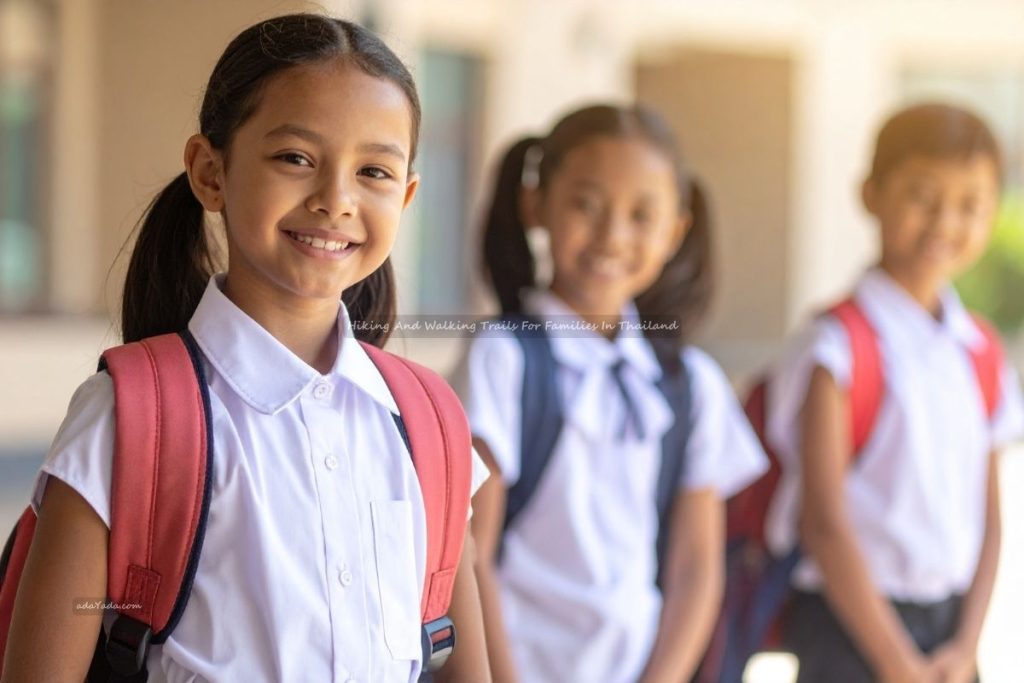
Thailand’s climate adds extra planning. Children may sweat during outdoor play, get wet during rainy season, sit in cold air-conditioned classrooms, or need different clothes for PE, swimming, sports days, ceremonies, and school trips.
The most important rule is simple: always follow the school’s official clothing list first. Then use practical extras to make daily life easier.
Check The Official School Uniform Rules First
Before buying school clothes, ask the school for its official uniform requirements.
The list may include:
- Regular school uniform
- PE uniform
- School shoes
- PE shoes
- Socks
- Hair accessories
- School hat
- Swimming clothes
- Jacket or cardigan
- Raincoat or umbrella rules
- Special event clothing
Some schools are strict about colours, logos, skirt length, shorts style, sock length, and shoe type. Other schools are more flexible.
Do not rely only on what looks similar in a shop. A white shirt, black shoe, or blue skirt may still be wrong if it does not match the school’s required design.
One of the most practical School Clothing Tips For Children In Thailand is to confirm everything before buying several sets.
Buy The Right Number Of Uniform Sets
Children in Thailand may need more than one or two uniform sets because clothes can become sweaty or dirty quickly.
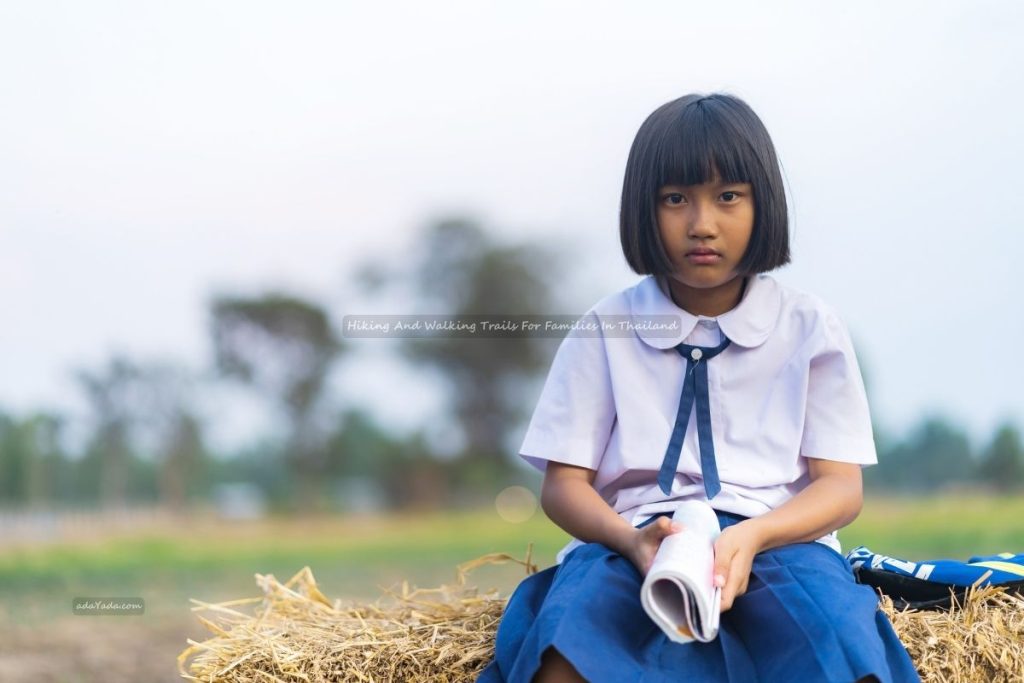
A practical starting point may be:
- Three to five regular uniform sets
- Two PE uniform sets
- Several pairs of school socks
- One or two pairs of school shoes
- One classroom jacket if allowed
- One spare clothing kit for younger children
The right number depends on the child’s age, school schedule, and laundry routine.
Kindergarten children may need more spare clothes. Older children may need fewer backups but more attention to PE schedules, shoes, and special activity days.
If laundry is done daily, fewer sets may work. If laundry is done every few days, extra uniforms can make mornings easier.
Choose Uniforms That Fit Properly
School uniforms should look neat, but they also need to be comfortable.
Check that:
- Shirts allow easy arm movement
- Waistbands are not too tight
- Shorts or skirts allow sitting and playing
- Buttons are manageable for the child
- Collars do not rub the neck
- Sleeves are not restrictive
- Shoes do not press the toes
- Socks do not leave strong marks
Children grow quickly, but uniforms that are much too large can feel uncomfortable and may look messy.
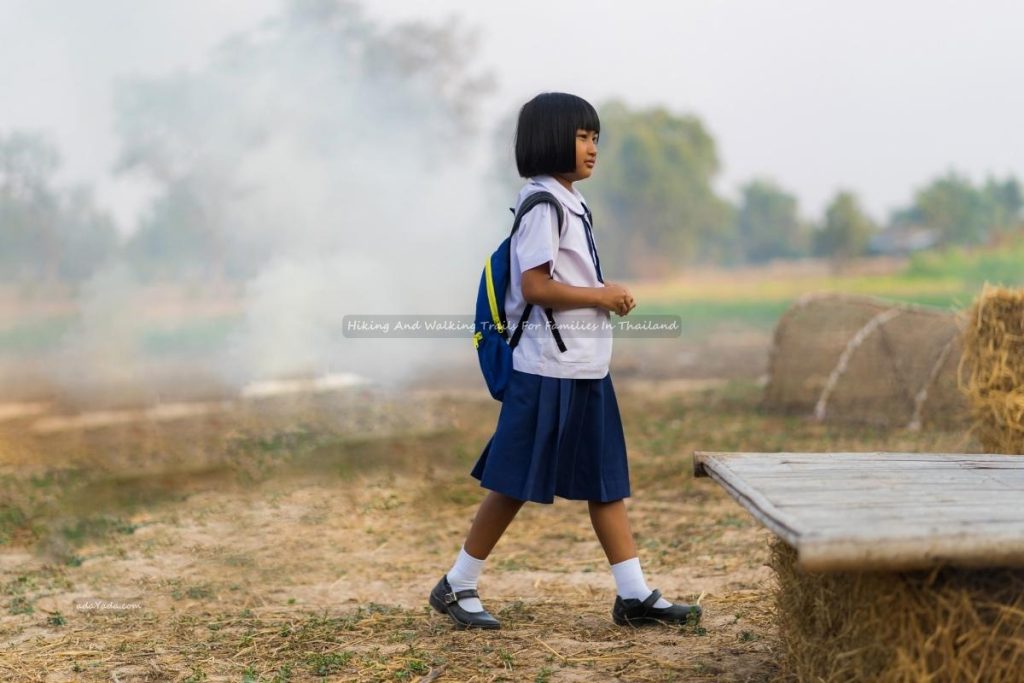
For young children, practise putting on and taking off uniforms at home. This is especially useful for toilet independence, PE changing, and swimming days.
Comfort is one of the most important School Clothing Tips For Children In Thailand because children wear these clothes for many hours.
Prepare For Hot Weather
Thailand is hot and humid for much of the year. Children may walk between classrooms, play outside, wait at school gates, or travel in warm vehicles.
If the school allows fabric choice, choose uniforms that are:
- Lightweight
- Breathable
- Soft
- Easy to wash
- Quick to dry
- Not too tight
- Durable enough for daily wear
Some official uniforms are made from specific fabrics, so parents may not have many choices. In that case, focus on correct sizing, enough clean sets, and a good laundry routine.
Avoid adding unnecessary layers unless the school requires them.
Plan For Air-Conditioned Classrooms
Although Thailand is hot outside, classrooms, school vans, libraries, and activity rooms may be cold because of air conditioning.
Some children feel cold after PE, swimming, rain, or sitting still for a long time.
Ask whether the school allows a jacket or cardigan. Some schools require an official school jacket, while others allow a plain colour.
Label the jacket clearly. Jackets are often removed during playtime or forgotten in classrooms.
This is one of the School Clothing Tips For Children In Thailand that parents may not think about until the child starts complaining about cold classrooms.
Choose Practical School Shoes
School shoes must follow school rules, but they should also be comfortable for daily use.
Look for shoes that:
- Fit well
- Do not rub the heel
- Have enough room for toes
- Are easy to clean
- Have safe soles
- Can handle walking and stairs
- Are suitable for wet paths when possible
Some schools require black shoes, white shoes, leather shoes, canvas shoes, or separate PE shoes.
For younger children, Velcro shoes may be easier than laces if the school allows them.
Do not wait too long to replace tight shoes. Children may not always explain discomfort clearly, so check the fit regularly.
Keep Extra Socks Ready
Socks are easy to lose, easy to stain, and often part of the school dress code.
Check the school rules for:
- Sock colour
- Sock length
- Logo rules
- PE sock requirements
- Formal event socks
White socks can become dirty quickly, especially during rainy season or outdoor play.
Buy enough pairs so one missing sock does not create a morning problem. A small laundry bag can help keep school socks together in the wash.
Organise PE Uniforms Carefully
PE days are one of the most common reasons children arrive at school in the wrong clothes.
Ask the school:
- Which days are PE days?
- Does the child wear PE clothes from home?
- Does the child change at school?
- Are PE shoes required?
- Does the child need a towel?
- Is a hat required for outdoor sports?
- Are spare socks needed?
PE clothes should be ready the night before.
For younger children, place the PE uniform in a clearly labelled bag if they need to change at school.
One of the easiest School Clothing Tips For Children In Thailand is to mark PE days on the family calendar.
Prepare For Swimming Days
Some schools in Thailand include swimming lessons or water activities.
Parents may need to prepare:
- Swimsuit or swim shorts
- Towel
- Swim cap if required
- Goggles if allowed
- Plastic bag for wet clothes
- Extra underwear
- Hairbrush or comb
- Spare school socks
Wet swimming clothes should not stay in the school bag for too long. Remove and wash them as soon as possible after school.
Ask the school whether swimming clothes must follow a specific colour or style.
Label Every School Item
School uniforms and accessories can easily get lost.
Label:
- Shirts
- Shorts
- Skirts
- PE uniforms
- School shoes
- PE shoes
- Socks
- Jackets
- Hats
- Towels
- Swimwear
- Raincoats
- Umbrellas
- School bags
- Water bottles
Use labels that survive washing. Iron-on labels, sew-in labels, waterproof stickers, and permanent fabric pens can all work.
Place names where teachers can find them easily, but avoid displaying the child’s full name too visibly outside school.
Labelling is one of the most useful School Clothing Tips For Children In Thailand for kindergarten and primary school parents.
Keep A Spare Clothing Kit At School
Younger children may need spare clothes at school.
A simple spare kit can include:
- Underwear
- Socks
- Shirt
- Shorts or skirt
- Small towel
- Plastic bag for wet clothes
- Hair tie if needed
Ask the school where spare clothes should be kept and how often they should be replaced.
Even older children may benefit from spare socks during rainy season.
A spare clothing kit prevents small accidents, spills, or wet clothes from becoming stressful problems.
Prepare For Rainy Season
Rainy season can make school clothing more difficult. Children may arrive with wet socks, damp shoes, or a soaked uniform.
Useful items may include:
- Lightweight raincoat
- Umbrella if the child can use it safely
- Waterproof school-bag cover
- Extra socks
- Plastic pouch for wet items
- Spare clothes for young children
- Quick-dry shoes if allowed
Label raincoats and umbrellas clearly because many children bring similar items.
If shoes become wet, dry them properly before the next school day. Keeping a second pair of school shoes can help if the budget allows.
Handle Mud, Sweat, And Stains Quickly
School clothes in Thailand often deal with sweat, food stains, mud, paint, and playground dirt.
A simple routine can help:
- Wash uniforms soon after use
- Treat stains early
- Separate white shirts from dark clothes
- Check pockets before washing
- Dry clothes fully before storing
- Prepare the next uniform at night
- Keep socks together
Avoid strong laundry products if your child has sensitive skin. Rinse uniforms well so detergent does not irritate the skin.
White uniforms may need extra care, especially around collars, sleeves, and socks.
Store School Clothes Separately
Keeping school clothes separate from everyday clothes saves time.
Parents can create one school area for:
- Regular uniforms
- PE uniforms
- Socks
- Shoes
- Hair accessories
- Jackets
- Rain gear
- Spare school items
This makes it easier for children to help prepare their own clothes.
A simple shelf, drawer, basket, or hanging section can work.
This support article should stay focused on school preparation, while broader outfit planning belongs in the general children clothing article.
Prepare The Night Before
Mornings are easier when everything is ready before bedtime.
Prepare:
- Regular uniform or PE uniform
- Underwear
- Socks
- Shoes
- Hair accessories
- Hat if needed
- Raincoat or umbrella
- Swimming bag if needed
- Spare clothes if requested
- School bag
This habit is especially useful for families with early school transport or more than one child.
Preparing at night also gives parents time to notice missing socks, wet shoes, or uniforms that are not clean.
Teach Children To Manage Their School Clothes
Children can gradually learn responsibility for their own school clothing.
Young children can:
- Put dirty uniforms in the laundry basket
- Place shoes near the door
- Put socks together
- Hang a hat on a hook
- Check their bag for spare clothes
Older children can:
- Prepare uniforms for the next day
- Check PE and swimming schedules
- Clean shoes
- Fold uniforms
- Tell parents when clothes are too small
- Notice missing socks or accessories
These habits reduce morning stress and build independence.
Budget-Friendly School Uniform Planning
School uniforms can become expensive when children grow quickly.
To manage costs:
- Buy required items first
- Avoid overbuying before school starts
- Ask about second-hand uniform groups
- Buy extra socks during sales
- Choose durable shoes
- Repair loose buttons early
- Keep one larger size ready if your child is growing fast
- Save event clothing for younger siblings if possible
Some schools sell uniforms directly. Others allow parents to buy from approved shops.
Always check school rules before buying cheaper alternatives elsewhere.
Shopping For School Uniforms In Thailand
Parents may find school items through:
- School uniform shops
- School offices
- Approved suppliers
- Department stores
- Local uniform shops
- Online shops
- Parent second-hand groups
When shopping online, check size charts carefully. Sizes can vary between sellers.
For shoes, in-person fitting is often safer because children’s feet can be difficult to size accurately online.
Buy one item first if you are unsure about sizing or fabric quality.
Common School Clothing Mistakes To Avoid
Buying Too Many Uniforms Too Early
Children grow quickly, and school rules may be more specific than expected.
Forgetting PE Or Swimming Days
A weekly calendar can help children arrive in the correct clothing.
Ignoring Rainy Season
Wet shoes, socks, and uniforms can make children uncomfortable.
Choosing Shoes Only By Appearance
School shoes need to fit well and handle daily movement.
Not Labelling Items
Unlabelled jackets, hats, shoes, and PE clothes are easy to lose.
Mixing School Clothes With Everyday Clothes
Keeping uniforms separate makes mornings easier.
Simple Weekly School Clothing Plan
A weekly plan can prevent last-minute problems.
Check:
- Which days need regular uniform
- Which days need PE uniform
- Whether swimming clothes are required
- Whether there is a school event
- Whether rain gear is needed
- Whether spare clothes need replacing
- Whether shoes are dry and clean
- Whether enough socks are ready
Keep the plan near the wardrobe, school bag area, or family calendar.
This is one of the most practical School Clothing Tips For Children In Thailand for busy families.
When To Replace School Clothes
Children may not always say when clothing is uncomfortable.
Check regularly for:
- Tight shoes
- Short trousers or skirts
- Shirts pulling at the shoulders
- Waistbands leaving marks
- Socks becoming too tight
- Stained or worn-out uniforms
- Broken buttons
- Damaged zippers
- Thin or worn fabric
Replacing items before they become a school-day problem can reduce stress.
It is also useful to check sizing before each new school term.
For everyday outfits, shopping tips, fabrics, and casual clothes beyond school uniforms, read our practical guide to children clothing in Thailand.
Conclusion
School clothing is a small part of family life, but it affects many school mornings. The right preparation can help children feel clean, comfortable, and ready for the day.
The best School Clothing Tips For Children In Thailand are simple: follow the school’s official list, buy enough uniform sets for your laundry routine, choose comfortable shoes, label everything, prepare for PE and swimming days, and keep spare clothes ready when needed.
Parents should also plan for rainy season, hot weather, cold classrooms, stains, and lost items.
This article should stay focused on school uniforms and school routines. For wider children’s clothing advice, parents can use a separate general guide about children clothing in Thailand.
FAQ
What Are The Best School Clothing Tips For Children In Thailand?
The best School Clothing Tips For Children In Thailand include checking the official uniform list, buying enough sets, choosing comfortable shoes, labelling every item, preparing for PE days, and keeping spare clothes ready.
How Many School Uniforms Does A Child Need In Thailand?
Many families use three to five regular uniform sets and two PE sets. The right number depends on laundry habits, school schedules, and the child’s age.
Do Thai Schools Have Different Uniform Rules?
Yes. Each school may have its own rules for shirts, skirts, shorts, shoes, socks, PE uniforms, jackets, hair accessories, and event clothing.
What Shoes Do Children Wear To School In Thailand?
It depends on the school. Some require black shoes, white shoes, canvas shoes, leather shoes, or separate PE shoes. Always check the official school rules.
Should Children Keep Spare Clothes At School?
Younger children often need spare clothes at school. Spare socks are also useful during rainy season.
How Can Parents Prepare School Clothes For Rainy Season?
Prepare a raincoat, umbrella if suitable, waterproof bag cover, extra socks, and a pouch for wet clothes. Make sure all rain items are labelled.
How Can Parents Stop School Uniforms From Getting Lost?
Label shirts, shorts, skirts, PE clothes, shoes, socks, jackets, hats, towels, bags, and water bottles with the child’s name.
How Can Parents Make School Mornings Easier?
Prepare uniforms, socks, shoes, PE clothes, rain gear, and school bags the night before. A weekly clothing plan also helps.
Can Parents Buy School Uniforms Online In Thailand?
Yes, but check school rules and size charts carefully. For shoes, in-person fitting is usually better.
How Often Should Parents Check The Fit Of School Clothes?
Check the fit before each school term and whenever the child complains about discomfort, tight shoes, short uniforms, or itchy fabrics.