








- Introduction
- Start With The Child’s Age
- Asking For Less Chili
- Asking For Very Mild Food
- Confirming That A Dish Is Not Spicy
- Check Sauces And Hidden Spice
- Ask For Sauce On The Side
- Choose Simple Textures
- Ask For Food To Be Cut Into Small Pieces
- Ask For Ingredients To Be Kept Separate
- Suitable Thai Rice Dishes
- Suitable Noodle Options
- Omelettes And Egg Dishes
- Mild Soups
- Grilled And Steamed Foods
- Hidden Spice In Familiar-Looking Dishes
- Common Allergen Considerations
- Asking About Peanuts
- Asking About Eggs
- Asking About Milk
- Asking About Seafood
- Asking About Fish Sauce
- Asking About Soy And Wheat
- Explain A Food Allergy Clearly
- Cross-Contact Considerations
- Share Family-Style Dishes Carefully
- Keep Adult And Child Dishes Separate
- Choose Suitable Portions
- Ask For A Small Portion
- Avoid Ordering Too Many Dishes At Once
- Introduce New Flavours Gradually
- Let Children Taste Without Pressure
- Ordering For Babies And Young Toddlers
- Ordering For Toddlers
- Ordering For Preschool Children
- Ordering For Older Children
- Teach Children A Few Useful Food Phrases
- What To Check At Restaurants
- Ask Whether Food Is Cooked To Order
- What To Check At Food Courts
- Check Displayed Food Carefully
- Check Food Temperature
- Consider The Dining Environment
- Bring A Small Backup Snack
- Drinks For Children
- Desserts And Sweet Snacks
- Food Hygiene Considerations
- Common Mistakes Parents Can Avoid
- A Practical Family Ordering Plan
- Useful Thai Phrases For Parents
- Conclusion
- FAQ
- How Do I Ask For Non-Spicy Food In Thai?
- How Do I Ask For Only A Little Chili?
- How Can I Ask For Sauce On The Side?
- Which Thai Foods May Be Easier For Toddlers?
- How Do I Ask Whether A Dish Contains Peanuts?
- How Do I Explain That My Child Has A Food Allergy?
- Is A Non-Spicy Dish Automatically Suitable For A Child?
- How Can Families Share Thai Food With Children?
- What Should Parents Check At A Food Court?
- How Should Parents Introduce Unfamiliar Thai Flavours?
Introduction
Thai food can be a rewarding part of travelling or living in Thailand with children. Many dishes combine rice, noodles, vegetables, eggs, meat, seafood, herbs, soups, and mild sauces that can work well for families.
However, not every dish described as mild will automatically be suitable for every child. Chili may be added during cooking, mixed into sauces, sprinkled on top, or placed in condiments served beside the meal. Some dishes also contain strong flavours, unfamiliar textures, fish sauce, peanuts, eggs, soy, seafood, coconut, or other ingredients that parents may need to check.
Choosing child-friendly Thai food involves more than ordering a dish that looks familiar. Parents should consider the child’s age, tolerance for spice, preferred textures, allergies, portion size, and willingness to try new flavours.
A useful request is:
ไม่เผ็ดครับ/ค่ะ
Mai phet khrap/kha.
Not spicy, please.
For a small amount of chili, say:
เผ็ดนิดหน่อยครับ/ค่ะ
Phet nit noi khrap/kha.
Only a little spicy, please.
This guide explains how parents can choose, order, and introduce child-friendly Thai food in restaurants, food courts, markets, hotels, and family-style meals.
👉 “Travelers interested in buying handmade products may also explore these useful Thai words for first-time visitors for help with simple conversations while shopping.”
Start With The Child’s Age
Children of different ages may need different foods, textures, and portions.
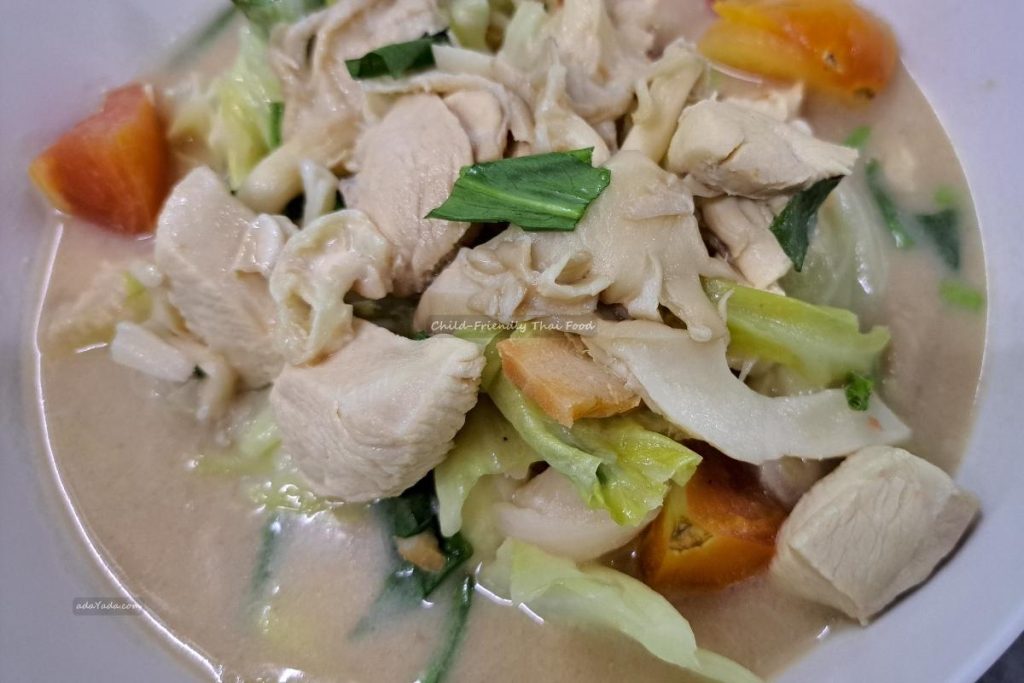
Babies beginning solid food may need very soft textures and simple ingredients. Toddlers may prefer small pieces, mild flavours, and foods that are easy to hold or chew. Older children may be ready to try stronger herbs, mixed dishes, soups, curries, and shared meals.
Before ordering child-friendly Thai food, consider:
- Whether the child can chew the texture safely
- Whether bones, shells, seeds, or hard pieces are present
- Whether the sauce contains chili
- Whether the dish can be served separately
- Whether the child accepts mixed textures
- Whether the serving is too large
- Whether the food is very hot in temperature
- Whether unfamiliar ingredients can be introduced gradually
A dish that suits an older child may not suit a toddler without changes.
Asking For Less Chili
The word for spicy is:
เผ็ด — phet — spicy
To ask for no chili or no spicy heat, say:
ไม่เผ็ดครับ/ค่ะ
Mai phet khrap/kha.
Not spicy, please.
You can also say:
ไม่ใส่พริกครับ/ค่ะ
Mai sai phrik khrap/kha.
Please do not add chili.
The word:
พริก — phrik — chili
is useful because some staff may understand a direct request about chili more clearly than a general request for mild food.
For only a small amount, say:
ใส่พริกนิดเดียวครับ/ค่ะ
Sai phrik nit diao khrap/kha.
Please add only a tiny amount of chili.
Asking For Very Mild Food
Useful requests include:
เผ็ดน้อยครับ/ค่ะ
Phet noi khrap/kha.
Less spicy, please.
เอาแบบเด็กกินได้ครับ/ค่ะ
Ao baep dek kin dai khrap/kha.
Please make it suitable for a child to eat.
ทำรสอ่อนได้ไหมครับ/คะ
Tham rot on dai mai khrap/kha?
Could you make the flavour mild?
The phrase:
รสอ่อน — rot on — mild flavour
can be useful when parents want less chili, less saltiness, or a gentler overall taste.
However, restaurants may interpret “mild” differently. It is often clearer to ask specifically for no chili.
Confirming That A Dish Is Not Spicy
Before ordering, ask:
เมนูนี้เผ็ดไหมครับ/คะ
Menu ni phet mai khrap/kha?
Is this dish spicy?
You can also ask:
มีพริกไหมครับ/คะ
Mi phrik mai khrap/kha?
Does it contain chili?
For children, a more specific question is:
เด็กกินได้ไหมครับ/คะ
Dek kin dai mai khrap/kha?
Is it suitable for a child to eat?
The final question is useful, but parents should still ask about particular ingredients because staff may judge suitability differently.
Check Sauces And Hidden Spice
A dish may look mild while its sauce contains chili, pepper, curry paste, or spicy seasoning.
Parents should check:
- Sauce mixed into the dish
- Dipping sauce served on the side
- Chili flakes
- Chili oil
- Curry paste
- Spicy seafood sauce
- Seasoned minced meat
- Soup broth
- Marinades
- Garnishes
Ask:
ซอสเผ็ดไหมครับ/คะ
Sot phet mai khrap/kha?
Is the sauce spicy?
You can also say:
แยกซอสได้ไหมครับ/คะ
Yaek sot dai mai khrap/kha?
Can the sauce be served separately?
Serving sauce separately can make child-friendly Thai food easier to control.
Ask For Sauce On The Side
A practical request is:
ขอซอสแยกครับ/ค่ะ
Khor sot yaek khrap/kha.
Please serve the sauce separately.
You may also ask:
ไม่ราดซอสครับ/ค่ะ
Mai rat sot khrap/kha.
Please do not pour sauce over it.
This is useful for:
- Grilled meat
- Fried food
- Rice dishes
- Noodles
- Salads
- Snacks
- Dumplings
- Seafood
Children can then try a small amount before more sauce is added.
Choose Simple Textures
Simple textures can make unfamiliar food easier for children to accept.
Possible options include:
- Soft rice
- Plain noodles
- Omelette
- Steamed egg
- Tender chicken
- Soft vegetables
- Clear soup
- Fried rice with simple ingredients
- Grilled meat cut into small pieces
- Soft tofu
- Ripe fruit
For toddlers, avoid assuming that every soft-looking dish is easy to eat. Meat may contain tough pieces, fish may contain bones, and soups may include hard herbs or whole spices.
Ask For Food To Be Cut Into Small Pieces
Use:
ช่วยหั่นเป็นชิ้นเล็กๆ ได้ไหมครับ/คะ
Chuai han pen chin lek lek dai mai khrap/kha?
Could you cut it into small pieces?
Another useful phrase is:
ขอชิ้นเล็กๆ ครับ/ค่ะ
Khor chin lek lek khrap/kha.
Small pieces, please.
This can help with:
- Chicken
- Pork
- Fish
- Fruit
- Omelette
- Vegetables
- Noodles
Parents should still check for bones, shells, hard seeds, and sharp pieces.
Ask For Ingredients To Be Kept Separate
Some children prefer foods that are not mixed together.
Use:
แยกข้าวกับกับข้าวได้ไหมครับ/คะ
Yaek khao kap kap khao dai mai khrap/kha?
Can the rice and dishes be served separately?
You can also ask:
แยกผักได้ไหมครับ/คะ
Yaek phak dai mai khrap/kha?
Can the vegetables be served separately?
แยกน้ำซุปได้ไหมครับ/คะ
Yaek nam sup dai mai khrap/kha?
Can the soup be served separately?
Separate components allow children to see and taste each item gradually.
Suitable Thai Rice Dishes
Rice is often a useful base for child-friendly Thai food.
Possible choices include:
- Plain steamed rice
- Egg fried rice
- Chicken fried rice without chili
- Rice with omelette
- Rice with grilled chicken
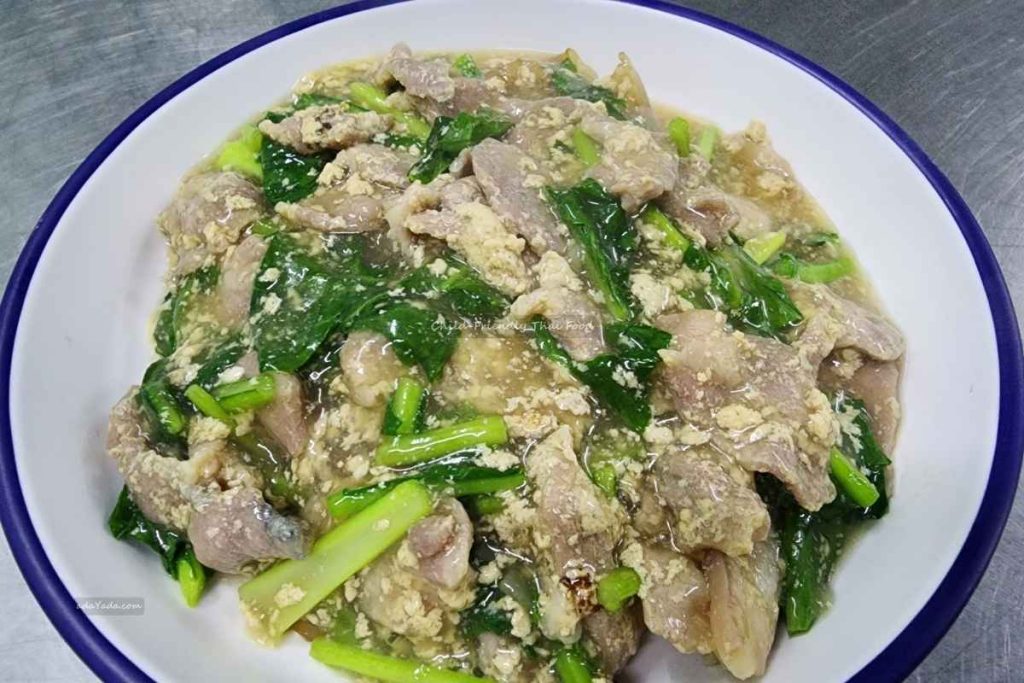
- Rice with mild stir-fried vegetables
- Rice with clear soup
- Rice with simple minced meat prepared without chili
Ask:
ข้าวผัดไม่ใส่พริกครับ/ค่ะ
Khao phat mai sai phrik khrap/kha.
Fried rice without chili, please.
For a simpler version:
ข้าวผัดใส่ไข่กับไก่ครับ/ค่ะ
Khao phat sai khai kap kai khrap/kha.
Fried rice with egg and chicken, please.
Suitable Noodle Options
Some children enjoy noodles because they are familiar and easy to eat.
Possible choices include:
- Plain rice noodles
- Mild noodle soup
- Stir-fried noodles without chili
- Noodles with egg
- Noodles with chicken
- Clear broth noodles
- Sauce served separately
Ask:
ก๋วยเตี๋ยวไม่เผ็ดครับ/ค่ะ
Kuaitiao mai phet khrap/kha.
Noodles without spice, please.
You can also ask:
ไม่ใส่พริกป่นครับ/ค่ะ
Mai sai phrik pon khrap/kha.
Please do not add chili powder.
Check the broth and condiments because spice may be added after cooking.
Omelettes And Egg Dishes
Thai omelette can be appealing to children because of its simple texture and familiar main ingredient.
Useful options include:
ไข่เจียว — khai jiao — Thai omelette
ไข่ดาว — khai dao — fried egg
ไข่ต้ม — khai tom — boiled egg
Ask:
ขอไข่เจียวไม่ใส่พริกครับ/ค่ะ
Khor khai jiao mai sai phrik khrap/kha.
Thai omelette without chili, please.
Parents should remember that egg is a common allergen. Cooking oil, sauces, and fillings should also be checked when necessary.
Mild Soups
Clear soups may be easier for some children than spicy curries or sour soups.
Possible choices include:
- Clear vegetable soup
- Mild chicken soup
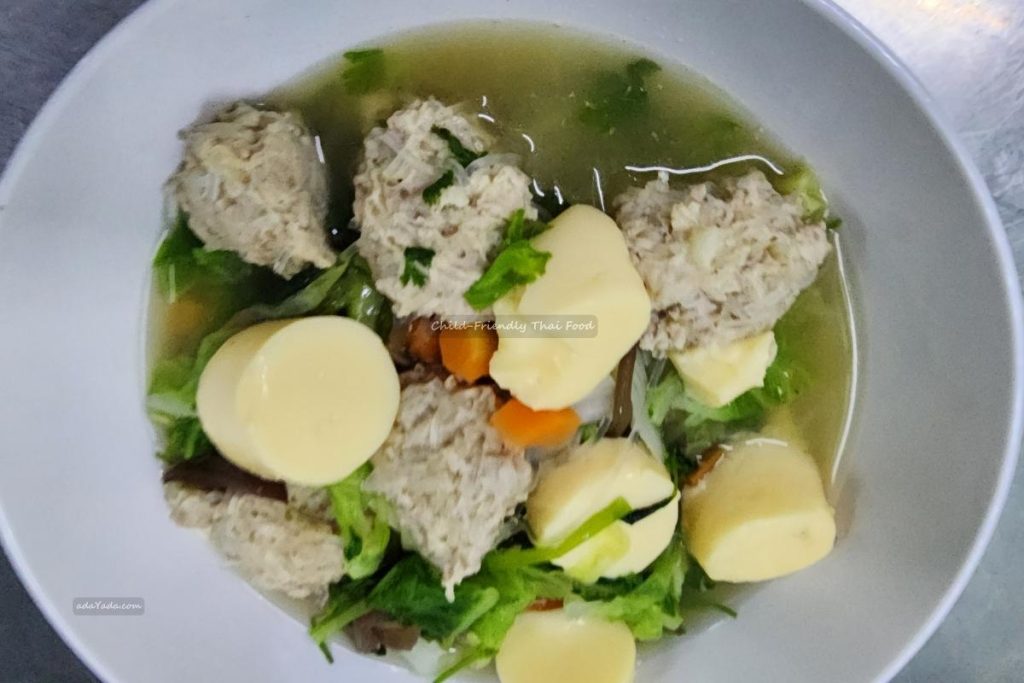
- Tofu soup
- Minced pork soup
- Egg soup
- Rice soup
Ask:
มีซุปไม่เผ็ดไหมครับ/คะ
Mi sup mai phet mai khrap/kha?
Do you have a non-spicy soup?
For rice soup:
ข้าวต้มไม่ใส่พริกครับ/ค่ะ
Khao tom mai sai phrik khrap/kha.
Rice soup without chili, please.
Check the temperature before giving soup to a child.
Grilled And Steamed Foods
Grilled or steamed dishes can sometimes be easier to control because sauce may be added separately.
Possible options include:
- Grilled chicken
- Steamed fish
- Grilled pork
- Steamed vegetables
- Plain rice
- Grilled tofu
- Steamed egg
Ask:
ไม่ราดซอสครับ/ค่ะ
Mai rat sot khrap/kha.
Please do not pour sauce over it.
For fish, always check carefully for bones before serving it to a child.
Hidden Spice In Familiar-Looking Dishes
Parents should not assume that a familiar-looking dish is mild.
Spice may appear in:
- Minced meat
- Fried rice
- Stir-fried noodles
- Sausages
- Fish cakes
- Dipping sauces
- Curry fillings
- Soup bases
- Fried snacks
- Marinated meat
- Salad dressings
Ask staff whether chili is cooked into the dish or can be removed.
A useful question is:
พริกผสมอยู่ในอาหารไหมครับ/คะ
Phrik phasom yu nai ahan mai khrap/kha?
Is chili mixed into the food?
Common Allergen Considerations
Thai dishes may contain ingredients associated with common food allergies.
These can include:
- Peanuts
- Tree nuts
- Eggs
- Milk
- Soy
- Wheat
- Fish
- Shellfish
- Sesame
- Coconut
Families managing allergies should not rely only on how a dish looks or on a general description.
Sauces, curry pastes, broths, garnishes, and cooking oils may contain ingredients not immediately visible.
Asking About Peanuts
Use:
มีถั่วลิสงไหมครับ/คะ
Mi thua lisong mai khrap/kha?
Does it contain peanuts?
To request no peanuts:
ไม่ใส่ถั่วลิสงครับ/ค่ะ
Mai sai thua lisong khrap/kha.
Please do not add peanuts.
Parents should also ask whether peanuts are already mixed into sauces or prepared in the same area.
Asking About Eggs
Use:
มีไข่ไหมครับ/คะ
Mi khai mai khrap/kha?
Does it contain egg?
To request no egg:
ไม่ใส่ไข่ครับ/ค่ะ
Mai sai khai khrap/kha.
Please do not add egg.
Egg may appear in fried rice, noodles, batter, desserts, sauces, and baked products.
Asking About Milk
Use:
มีนมไหมครับ/คะ
Mi nom mai khrap/kha?
Does it contain milk?
To request no milk:
ไม่ใส่นมครับ/ค่ะ
Mai sai nom khrap/kha.
Please do not add milk.
Some drinks, desserts, sauces, breads, and modern café dishes may contain milk or condensed milk.
Asking About Seafood
Useful words include:
อาหารทะเล — ahan thale — seafood
กุ้ง — kung — shrimp
ปู — pu — crab
ปลา — pla — fish
หอย — hoi — shellfish
Ask:
มีอาหารทะเลไหมครับ/คะ
Mi ahan thale mai khrap/kha?
Does it contain seafood?
Seafood may be present in sauces, soup bases, curry paste, seasoning, or garnishes even when it is not the main ingredient.
Asking About Fish Sauce
Fish sauce is common in Thai cooking.
The Thai word is:
น้ำปลา — nam pla — fish sauce
Ask:
ใส่น้ำปลาไหมครับ/คะ
Sai nam pla mai khrap/kha?
Does it contain fish sauce?
To request no fish sauce:
ไม่ใส่น้ำปลาครับ/ค่ะ
Mai sai nam pla khrap/kha.
Please do not add fish sauce.
Families avoiding fish should also ask about broths and prepared sauces.
Asking About Soy And Wheat
Soy sauce is:
ซีอิ๊ว — si-iu — soy sauce
Ask:
ใส่ซีอิ๊วไหมครับ/คะ
Sai si-iu mai khrap/kha?
Does it contain soy sauce?
Wheat may be present in some sauces, noodles, fried coatings, and processed foods.
For serious allergies, families should use a clearly translated allergy card and confirm preparation methods with staff.
Explain A Food Allergy Clearly
A useful phrase is:
แพ้อาหารครับ/ค่ะ
Phae ahan khrap/kha.
I have a food allergy.
To name the ingredient:
ลูกแพ้ถั่วลิสงครับ/ค่ะ
Luk phae thua lisong khrap/kha.
My child is allergic to peanuts.
You can add:
กินไม่ได้ครับ/ค่ะ
Kin mai dai khrap/kha.
The child cannot eat it.
For example:
ลูกแพ้กุ้ง กินกุ้งไม่ได้ค่ะ
Luk phae kung, kin kung mai dai kha.
My child is allergic to shrimp and cannot eat it.
Cross-Contact Considerations
Even when an ingredient is removed, food may be prepared:
- In the same wok
- In the same fryer
- On the same grill
- With shared utensils
- Near powdered allergens
- With prepared sauces
- In a shared food court kitchen
Parents managing serious allergies should ask whether separate preparation is possible.
A useful question is:
ทำแยกได้ไหมครับ/คะ
Tham yaek dai mai khrap/kha?
Can it be prepared separately?
If the restaurant cannot confidently answer, choosing another place may be safer.
Share Family-Style Dishes Carefully
Thai meals are often shared, with several dishes placed in the centre of the table.
This can work well for families because children can try small amounts of different foods.
A balanced family order might include:
- Plain rice
- One mild egg dish
- One mild vegetable dish
- One grilled or steamed protein
- One soup
- Spicy dishes kept separate for adults
Place a small portion on the child’s plate before shared serving spoons become mixed with spicy sauces.
Keep Adult And Child Dishes Separate
Spicy spoons, sauces, and serving utensils can transfer chili into mild food.
Parents can:
- Request separate serving spoons
- Serve children first
- Keep spicy sauces at one end of the table
- Order plain rice separately
- Ask for dipping sauces on the side
- Avoid mixing leftovers from different plates
- Use a separate bowl for the child
These simple habits help keep child-friendly Thai food mild.
Choose Suitable Portions
Restaurant portions may be larger than a child needs.
Start with a small serving and add more when the child is still hungry.
A suitable plate may include:
- A small amount of rice or noodles
- A modest protein portion
- A few vegetables
- Sauce served lightly or separately
- Water
- Fruit when available
Large portions can be overwhelming, especially when a child is trying an unfamiliar dish.
Ask For A Small Portion
Use:
ขอจานเล็กได้ไหมครับ/คะ
Khor jan lek dai mai khrap/kha?
Could I have a small portion?
Another useful request is:
ขอครึ่งหนึ่งได้ไหมครับ/คะ
Khor khrueng nueng dai mai khrap/kha?
Could I have half a portion?
Not every restaurant offers smaller portions, but families can share a dish or take leftovers when appropriate.
Avoid Ordering Too Many Dishes At Once
A large table of unfamiliar food may overwhelm a young child.
A practical approach is:
- Begin with plain rice
- Add one familiar item
- Choose one mild new dish
- Keep sauces separate
- Order more only if needed
This method reduces waste and makes it easier to identify which flavours the child accepts.
Introduce New Flavours Gradually
Children may need several opportunities to become familiar with a new flavour.
Parents can begin with:
- A small spoon of broth
- A tiny amount of sauce
- One soft vegetable
- A bite of grilled meat
- A small noodle portion
- A little coconut-based flavour
- Mild herbs in small amounts
Do not make the entire meal depend on the child accepting one unfamiliar dish.
Combine familiar and new foods on the same plate.
Let Children Taste Without Pressure
A child may smell, touch, lick, or take a very small bite before deciding whether to eat more.
Parents can describe the food simply:
- Soft
- Crispy
- Sweet
- Salty
- Mild
- Warm
- Similar to rice
- Similar to noodles
Avoid presenting unfamiliar Thai food as a test or challenge.
The goal is to create a calm introduction rather than force immediate acceptance.
Ordering For Babies And Young Toddlers
Very young children may need:
- Soft rice
- Mashed vegetables
- Plain noodles
- Soft egg
- Tender meat cut finely
- Mild soup
- Fruit in suitable pieces
- Food without whole nuts
- Food without hard shells or bones
Parents should consider the child’s stage of eating and avoid foods that are difficult to chew or safely manage.
Ask whether a dish can be prepared with less seasoning:
ทำจืดๆ ได้ไหมครับ/คะ
Tham juet juet dai mai khrap/kha?
Could you make it plain and mild?
Ordering For Toddlers
Toddlers often do well with small, recognisable components.
Possible choices include:
- Plain rice with omelette
- Mild fried rice
- Clear noodle soup
- Grilled chicken
- Soft tofu
- Steamed vegetables
- Rice soup
- Fruit
Parents should check that the food is not too hot in temperature and cut long noodles or large pieces when needed.
Ordering For Preschool Children
Preschool children may be ready for:
- Mild stir-fried noodles
- Chicken and rice
- Mild soups
- Simple vegetable dishes
- Small amounts of coconut-based curry without chili
- Fried rice with chosen ingredients
- Grilled fish after bones are removed
- Mild dipping sauces served separately
Let the child choose between two suitable dishes rather than from the entire menu.
Ordering For Older Children
Older children may be ready to explore:
- Mild curries
- Stir-fried basil without chili
- Noodle dishes
- Thai soups with adjusted spice
- Grilled seafood
- Vegetable stir-fries
- Family-style meals
- Mild salads with dressing controlled
- Regional dishes adapted for spice
Older children can learn to ask whether food is spicy and explain what they prefer.
Teach Children A Few Useful Food Phrases
Older children may benefit from learning:
ไม่เผ็ดครับ/ค่ะ
Mai phet khrap/kha.
Not spicy, please.
ไม่เอาพริกครับ/ค่ะ
Mai ao phrik khrap/kha.
No chili, please.
อร่อยครับ/ค่ะ
Aroi khrap/kha.
Delicious.
ขอน้ำครับ/ค่ะ
Khor nam khrap/kha.
Water, please.
อิ่มแล้วครับ/ค่ะ
Im laeo khrap/kha.
I am full.
Using simple language can make family dining more engaging.
What To Check At Restaurants
Before ordering child-friendly Thai food, check:
- Whether dishes are cooked to order
- Whether chili can be removed
- Whether sauces can be served separately
- Whether staff understand allergy questions
- Whether high chairs are available
- Whether toilets are nearby
- Whether the restaurant has air conditioning or fans
- Whether food can be cut into small pieces
- Whether plain rice is available
- Whether portions can be shared
- Whether there is space for a stroller
- Whether the waiting time suits the child
A restaurant does not need a special children’s menu to work well for families.
Ask Whether Food Is Cooked To Order
Use:
ทำใหม่ได้ไหมครับ/คะ
Tham mai dai mai khrap/kha?
Can it be freshly prepared?
Another useful question is:
ทำแยกได้ไหมครับ/คะ
Tham yaek dai mai khrap/kha?
Can it be prepared separately?
Freshly prepared dishes may be easier to adjust than food that is already mixed with chili or sauce.
What To Check At Food Courts
Food courts can be convenient because families can compare several stalls in one place.
Check:
- Whether food is already prepared
- Whether a mild version can be made
- Whether the stall uses shared utensils
- Whether pictures match the actual ingredients
- Whether sauces are added automatically
- Whether seating is available
- Whether high chairs are provided
- Whether drinking water is easy to find
- Whether toilets are nearby
- Whether the food court becomes crowded
- Whether payment requires a prepaid card
At a busy food court, it can help to choose one adult to order while another remains with the children.
Check Displayed Food Carefully
Prepared food may already contain chili, fish sauce, peanuts, seafood, or other allergens.
Ask:
จานนี้มีอะไรบ้างครับ/คะ
Jan ni mi arai bang khrap/kha?
What ingredients are in this dish?
You can also ask:
อันไหนไม่เผ็ดครับ/คะ
An nai mai phet khrap/kha?
Which one is not spicy?
Staff may point to a suitable option, but parents should still confirm important ingredients.
Check Food Temperature
Food may arrive extremely hot from the wok, fryer, grill, or soup pot.
Before serving a child:
- Stir soups and rice
- Cut open fried food
- Check the centre of meat
- Let noodles cool
- Move hot bowls away from the edge
- Keep children away from tabletop cooking equipment
- Check plates that may be hot
A dish can be mild in flavour but still unsafe to eat immediately because of its temperature.
Consider The Dining Environment
The environment can affect whether a meal works for a child.
Families may prefer:
- A quieter table
- Space away from traffic
- A table away from hot cooking areas
- Easy access to toilets
- Enough room for a stroller
- Air conditioning or strong fans
- Shorter waiting times
- Seating with a backrest
- Nearby handwashing facilities
For toddlers, a calm setting may be more important than having a large menu.
Bring A Small Backup Snack
Even with careful planning, a child may reject an unfamiliar meal.
A familiar backup snack can help when:
- Service is slow
- A requested adjustment is unavailable
- The child is tired
- The food is unexpectedly spicy
- Allergy information is unclear
- The restaurant has few simple options
The backup should not replace every opportunity to try local food, but it can reduce stress.
Drinks For Children
Water is usually the simplest option.
Ask:
ขอน้ำเปล่าครับ/ค่ะ
Khor nam plao khrap/kha.
Plain water, please.
Check sweet drinks carefully because some may contain large amounts of sugar, syrups, condensed milk, or caffeine.
Ask:
หวานไหมครับ/คะ
Wan mai khrap/kha?
Is it sweet?
To request less sweetness:
หวานน้อยครับ/ค่ะ
Wan noi khrap/kha.
Less sweet, please.
Desserts And Sweet Snacks
Thai desserts may contain coconut milk, sticky rice, fruit, beans, egg, sesame, or condensed milk.
Parents should consider:
- Allergens
- Sugar content
- Sticky textures
- Whole nuts or seeds
- Portion size
- Food temperature
- Whether the child has already eaten enough
A family can share one dessert so the child can taste a small amount.
Food Hygiene Considerations
Parents may prefer food that is:
- Freshly cooked
- Served hot
- Protected from insects and dust
- Prepared with clean utensils
- Stored at a suitable temperature
- Served in clean dishes
- Made with ingredients that look fresh
- Prepared at a stall with steady customer turnover
Freshly cooked food can be easier to assess than food that has been sitting uncovered.
Common Mistakes Parents Can Avoid
Assuming Mild Means No Chili
A mild dish may still contain some chili. Ask for mai sai phrik when no chili is needed.
Forgetting About Sauce
Sauce may contain more spice than the main ingredients. Request it separately.
Ordering Only From The Children’s Menu
A simple adult dish may be easier to adapt than a highly processed children’s option.
Introducing Too Many New Foods At Once
Combine one new item with familiar rice, noodles, egg, or fruit.
Ignoring Texture
A non-spicy dish may still be difficult for a toddler to chew.
Serving An Adult Portion
Begin with a small serving and add more when needed.
Mixing Serving Spoons
A spoon used in a spicy dish can transfer chili into the child’s food.
Assuming Staff Know Every Allergy Risk
Ask about specific ingredients and preparation methods.
Forgetting The Food Court Environment
Crowds, hot trays, queues, and limited seating may be difficult with young children.
Avoiding these mistakes makes it easier to choose child-friendly Thai food.
A Practical Family Ordering Plan
A simple family order may include:
Plain base: steamed rice or mild noodles
Protein: omelette, grilled chicken, tofu, or carefully checked fish
Vegetable: mild stir-fried or steamed vegetables
Soup: clear, non-spicy soup
Adult dish: one spicier dish kept separate
Sauces: served on the side
Drink: water
This structure gives children familiar choices while allowing the family to enjoy a wider Thai meal.
Useful Thai Phrases For Parents
ไม่เผ็ดครับ/ค่ะ
Mai phet khrap/kha.
Not spicy, please.
ไม่ใส่พริกครับ/ค่ะ
Mai sai phrik khrap/kha.
Please do not add chili.
เผ็ดน้อยครับ/ค่ะ
Phet noi khrap/kha.
Less spicy, please.
มีพริกไหมครับ/คะ
Mi phrik mai khrap/kha?
Does it contain chili?
ขอซอสแยกครับ/ค่ะ
Khor sot yaek khrap/kha.
Please serve the sauce separately.
เด็กกินได้ไหมครับ/คะ
Dek kin dai mai khrap/kha?
Is it suitable for a child?
ช่วยหั่นเป็นชิ้นเล็กๆ ได้ไหมครับ/คะ
Chuai han pen chin lek lek dai mai khrap/kha?
Could you cut it into small pieces?
มีถั่วลิสงไหมครับ/คะ
Mi thua lisong mai khrap/kha?
Does it contain peanuts?
ลูกแพ้อาหารครับ/ค่ะ
Luk phae ahan khrap/kha.
My child has a food allergy.
ทำแยกได้ไหมครับ/คะ
Tham yaek dai mai khrap/kha?
Can it be prepared separately?
👉 “Families planning meals in Thailand may also explore these helpful tips for choosing child-friendly activities that suit different ages, interests, and energy levels.”
Conclusion
Choosing child-friendly Thai food becomes easier when parents focus on spice, texture, ingredients, portions, and the child’s age rather than searching only for dishes labelled for children.
Ask clearly for no chili by saying mai sai phrik. The shorter mai phet is also useful, but confirming that chili is not mixed into the sauce or dish provides greater clarity.
Sauces and condiments should be checked carefully because they may contain hidden spice, peanuts, seafood, fish sauce, soy, or other allergens. Requesting sauce on the side allows parents to control how much the child tries.
Simple rice, noodles, omelette, clear soup, grilled chicken, steamed vegetables, tofu, and carefully checked fish can provide useful starting points for child-friendly Thai food.
Children do not need to begin with a full portion of an unfamiliar meal. Introduce new flavours gradually beside familiar foods and allow the child to taste without pressure.
Family-style dining can work well when mild dishes are included and spicy food is kept separate. Serve the child before shared spoons come into contact with chili-heavy sauces.
Portion sizes should reflect the child’s age and appetite. Start small, allow time to eat, and order more only when necessary.
For allergies, ask about specific ingredients rather than only asking whether a dish is safe. Prepared sauces, broths, cooking oil, shared utensils, and cross-contact may all matter.
When ordering for toddlers, focus on soft textures, small pieces, mild seasoning, and food without bones or shells. Older children may be ready to try more complex flavours and can learn a few simple Thai ordering phrases.
At restaurants and food courts, check whether dishes are cooked to order, whether sauces can be separated, whether toilets and seating are suitable, and whether staff can answer ingredient questions.
The best child-friendly Thai food does not have to be completely unfamiliar or completely plain. A balanced approach combines simple, trusted foods with small opportunities to experience Thai flavours comfortably and safely.
FAQ
How Do I Ask For Non-Spicy Food In Thai?
Say ไม่เผ็ดครับ/ค่ะ — mai phet khrap/kha or ไม่ใส่พริกครับ/ค่ะ — mai sai phrik khrap/kha.
How Do I Ask For Only A Little Chili?
Say ใส่พริกนิดเดียวครับ/ค่ะ — sai phrik nit diao khrap/kha.
How Can I Ask For Sauce On The Side?
Say ขอซอสแยกครับ/ค่ะ — khor sot yaek khrap/kha.
Which Thai Foods May Be Easier For Toddlers?
Possible choices include plain rice, mild fried rice, omelette, rice soup, soft noodles, tofu, tender chicken, and soft vegetables.
How Do I Ask Whether A Dish Contains Peanuts?
Say มีถั่วลิสงไหมครับ/คะ — mi thua lisong mai khrap/kha?
How Do I Explain That My Child Has A Food Allergy?
Say ลูกแพ้อาหารครับ/ค่ะ — luk phae ahan khrap/kha, followed by the name of the allergen.
Is A Non-Spicy Dish Automatically Suitable For A Child?
No. Parents should also check texture, allergens, bones, shells, sauces, saltiness, food temperature, and portion size.
How Can Families Share Thai Food With Children?
Order plain rice, one or two mild dishes, sauce on the side, and separate spicy dishes for adults. Serve the child first using clean serving utensils.
What Should Parents Check At A Food Court?
Check whether food is freshly prepared, whether chili can be removed, whether sauces contain allergens, whether seating and toilets are nearby, and whether payment requires a special card.
How Should Parents Introduce Unfamiliar Thai Flavours?
Offer a small taste beside familiar food, keep the experience relaxed, and allow repeated opportunities without pressure.