








- Introduction
- Set Up a Simple Receipt Math Activity
- Choose a Challenge That Fits Your Child
- Find and Match a Digit
- Put Prices in Order
- Add Two Items Before the Whole Basket
- Play Shop and Work Out Change
- Estimate Before Calculating
- Try a Budget or a Discount
- Keep the Activity Useful and Manageable
- Build a Small Receipt Math Routine
- Investigate Quantities and Unit Prices
- Become a Receipt Detective
- Notice What to Try Next
- Conclusion
- FAQ
Introduction
Receipt math turns a short shopping list into number practice. Copy three grocery items and their prices onto plain paper, then choose one task: find a digit, compare two prices, add a total or work out change. You can start with a pencil and a pretend receipt; no app or new purchase is needed.
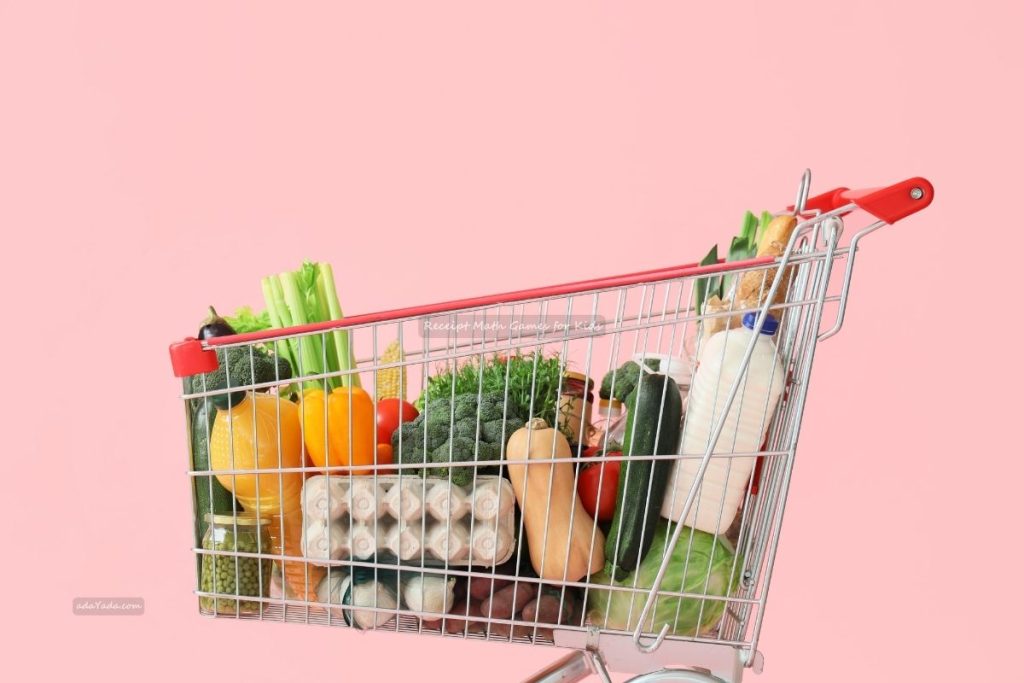
For a family in Thailand, amounts in baht give the activity a familiar setting. The examples below use invented prices for practice, not current supermarket prices. Choose the challenge according to what your child can already do, and stop while the activity still feels enjoyable.
Set Up a Simple Receipt Math Activity
Use a handwritten copy so you can enlarge the numbers and leave out distracting store codes. If copying a real receipt, omit payment information, membership numbers, names and other personal details. Keep the original for your records.
For receipt math, a short, clear list works better than a long shopping bill. Draw three product pictures if your child cannot yet read the labels. You can write the names in the language your family uses most comfortably, adding another language later if helpful.
- Bananas: 35 baht
- Milk: 48 baht
- Rice: 62 baht
- Total: 145 baht
These are the prices for one listed purchase of each item. There are no discounts, extra charges or separate taxes in this pretend receipt. A real receipt may include quantities, unit prices and adjustments, so simplify it before using it with a beginner.
For receipt math, have spare paper nearby for drawings and calculations. For counting practice, draw circles or use suitable large objects under supervision. You do not need real coins. Keep the number of objects small enough for your child to handle comfortably.
Choose a Challenge That Fits Your Child
Start receipt math with something your child can explain, rather than choosing a task solely by age. Recognizing a written digit, counting objects and adding prices are different tasks. A child who can count aloud may still need help connecting a written number with a quantity.
- Recognizing digits: find a matching digit on two pieces of paper.
- Comparing numbers: decide which of two prices is larger.
- Adding: combine two item prices before tackling the whole list.
- Working with money: calculate change or try a small pretend budget.
NAEYC’s guidance on supporting math through everyday conversation encourages adults to discuss practical problems and let children explain their thinking. Treat these activities as conversations, not timed tests. The games here are suggested practice activities, not a guarantee of any particular learning outcome.
Find and Match a Digit
For an introductory receipt math game, write a large 5 on a separate card. Ask your child to find the same digit in the copied receipt. They might notice it in 35 or 145. Circle one match together and name the digit.
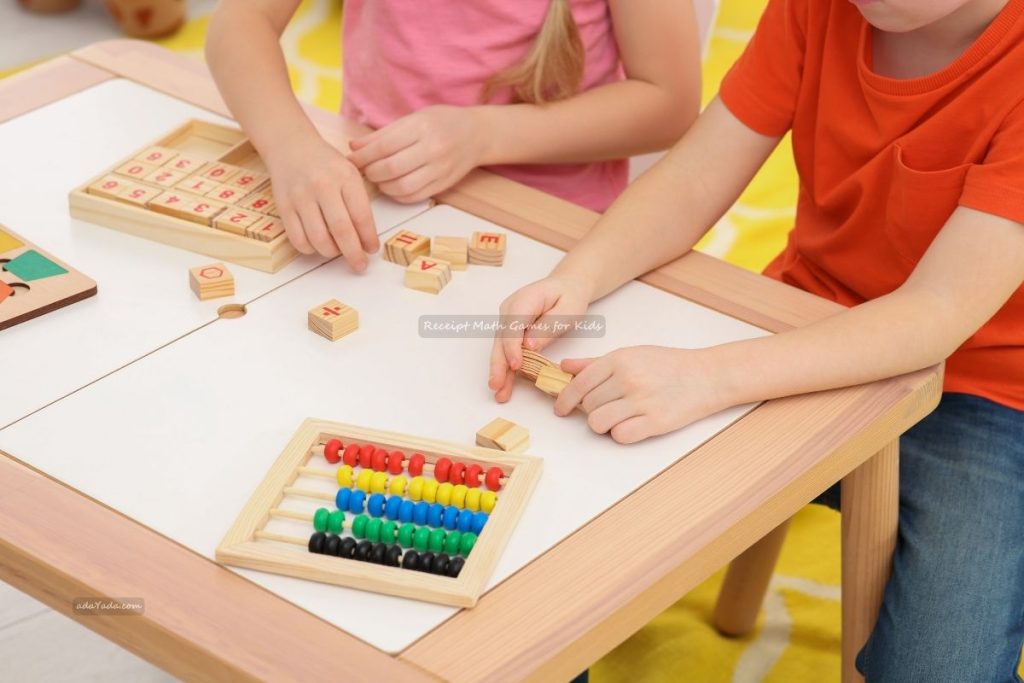
Keep the distinction clear: finding the digit 5 inside 35 does not mean the whole price is five baht. If two-digit prices are confusing, make a separate pretend list with prices of 2, 4 and 5. Match those numbers first.
To connect a number with a quantity, draw four apples beside the price card marked 4 and count the drawings together. Explain that this drawing is a counting activity, not a claim about how many apples a real purchase contains. Let your child make a matching card for you to find.
Put Prices in Order
Write 35, 48 and 62 on three separate cards, keeping each product name beside its price. Ask your child to place them from the smallest amount to the largest: 35, 48, 62. Then reverse the order.
This receipt math task becomes more useful when you ask how they decided. For a child learning place value, show that 35 has three tens, while 48 has four tens. A number line or drawings of groups of ten can make the comparison visible.
Next ask which item costs the most and which costs the least in this example. The answers are rice and bananas. Avoid turning that into a general statement about food prices: it is only true for the pretend list you are using.
Add Two Items Before the Whole Basket
Begin this receipt math activity with bananas and milk. Their combined cost is 35 + 48 = 83 baht. One way to work it out is to add 30 + 40 = 70, then 5 + 8 = 13, and finally 70 + 13 = 83.
Your child may use a different method. They could start at 48, add 30 to reach 78, then add 5 to reach 83. Ask them to show the steps with writing or drawings instead of insisting on one method.
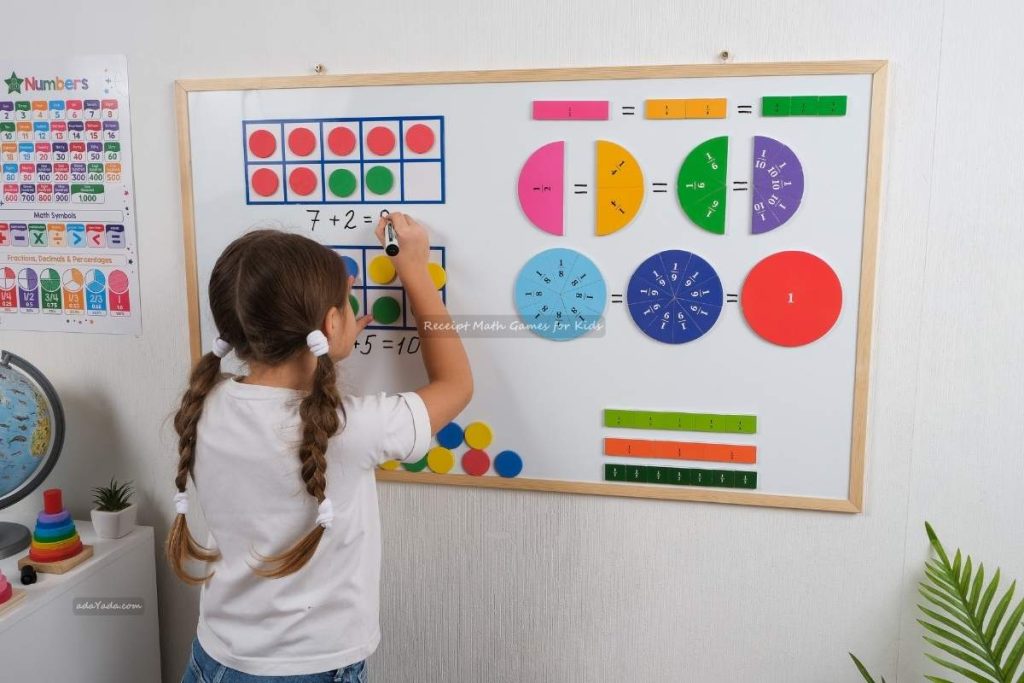
When two items feel manageable, add the rice: 83 + 62 = 145 baht. Cover the printed total before calculating, then uncover it to check. If the answer differs, revisit one pair of numbers together rather than repeating the whole problem immediately.
Play Shop and Work Out Change
Take turns being the shopper and the shopkeeper. For this receipt math game, make a paper payment card marked 200 baht. The shopper buys all three items for 145 baht. The change is 200 − 145 = 55 baht.
You can also count up from the cost: 145 to 150 is 5, then 150 to 200 is 50. Adding those steps gives 55. Check the result by adding the cost and change: 145 + 55 = 200.
For a simpler round, use a pretend item costing 6 baht and a payment of 10 baht. For a harder round, let the shopkeeper invent a different payment amount that is greater than the total. Keep the arithmetic written down so both players can check it.
Estimate Before Calculating
Older or more confident learners can try estimating. Round the example prices to the nearest ten, rounding a halfway value upward: 35 becomes 40, 48 becomes 50 and 62 becomes 60. The estimated total is 150 baht.
The exact total is 145 baht, so the estimate is 5 baht higher. Receipt math offers a concrete way to discuss why an estimate can be useful without being exact. Ask whether 150 would cover this pretend basket, then compare it with a budget of 140.
Keep rounding separate from payment. The shopkeeper does not change a real price just because you rounded it during an exercise. Write “estimate” above one answer and “exact total” above the other.
Try a Budget or a Discount
Give the shopper a pretend budget of 100 baht. Bananas and milk cost 83, leaving 17. Bananas and rice cost 97, leaving 3. Milk and rice cost 110, which is 10 over the budget. Ask your child to find both pairs that fit.
Another receipt math variation is a clearly stated pretend coupon: take 10 baht off the full 145-baht basket. The new total is 135 baht. With a 200-baht payment, the change becomes 65 baht. This is an invented game rule, not an explanation of any store’s coupon policy.
Add only one new condition at a time. When a child is working on addition, a budget, discount and unfamiliar decimal notation together can obscure the task you intended to practise.
Keep the Activity Useful and Manageable
A short receipt math session can consist of one question and a role swap. Choose a calm moment after shopping rather than trying to finish a lesson while unpacking groceries or rushing to another activity. Let your child choose which two products to compare.
Stanford’s DREME resource on math conversations around grocery shopping provides further ideas for bringing number talk into everyday family routines. Use the receipt as a starting point for discussion, not as an obligation to turn every shopping trip into schoolwork.
For another quiet activity afterwards, browse our indoor play ideas for rainy days. Families putting together a varied home-learning routine can also explore our article on Montessori methods at home.
Build a Small Receipt Math Routine
Keep the setup repeatable by using the same three-item receipt for several sessions. You do not need fresh shopping or a new worksheet each time. On one day, match digits; on another, compare prices. Later, return to the familiar numbers for addition. Change the question before changing every number.
A simple receipt math routine could begin with your child choosing one product picture. Ask one question about its price, give them time to respond, and then swap roles. They can ask you a question, check your answer or create a new price card. Finish by putting the cards together in an envelope for next time.
If siblings join in, give them different jobs using the same list. One child can find a digit while another adds two prices. They do not need to race or complete identical calculations. The shared goal can be preparing a pretend shopping basket together, with each person contributing something manageable.
For receipt math in a multilingual household, keep the quantities and written calculations consistent while choosing whichever language makes discussion easiest. A parent might name the product in Thai and explain the addition in English, or do the reverse. If a word is unfamiliar, point to the drawing and repeat the number before adding more vocabulary.
Investigate Quantities and Unit Prices
When your child is comfortable adding prices, introduce the difference between one item’s price and the cost of several items. Make a new pretend line: three yogurts at 12 baht each. The line total is 36 baht because 12 + 12 + 12 = 36. A child familiar with multiplication can write 3 × 12 = 36.
In this receipt math exercise, label the columns clearly: quantity, price each and line total. The number 3 tells you how many yogurts you bought; 12 is the price of one yogurt; 36 is what that line contributes to the bill. These numbers describe different things, even though they appear beside the same product.
Try a second line with two juice cartons at 15 baht each. That line costs 30 baht, making the combined bill 36 + 30 = 66 baht. Ask your child to explain why adding only 12 and 15 would not give the full bill. The calculation must include the quantities.
A further receipt math challenge is comparing two pretend offers for identical items of the same size: a single yogurt for 12 baht or a pack of four for 44 baht. The pack costs 11 baht per yogurt, because 44 ÷ 4 = 11. Four singles cost 48 baht, so the pack saves 4 baht if you actually want four. Discuss why a lower price per item does not automatically mean spending less overall.
Become a Receipt Detective
For another receipt math game, deliberately write one incorrect total on a practice sheet and tell your child that you have done so. Use the original bananas, milk and rice prices, but write a total of 155 baht. Ask them to check the bill and explain the difference.
The correct total is 145 baht, so the pretend bill is 10 baht too high. Your child can check it by adding the three prices, or by combining 35 and 62 to make 97 and then adding 48. Let them choose the method and show enough working that you can follow it.
Keep this receipt math activity separate from accusations about real shops. It is a made-up puzzle. If an actual receipt seems confusing, a parent should review quantities, discounts and other entries before assuming a mistake. An unfamiliar line is a reason to ask a question, not proof of an incorrect charge.
After solving your puzzle, invite your child to create one for you. They can change a price or a total, but ask them to keep their own answer on a separate sheet. Creating an answer key gives both players a way to resolve disagreements without guessing.
Notice What to Try Next
At the end of receipt math, note one thing your child managed independently and one thing that needed support. For example: “Compared 35 and 48 without help; needed drawings to add them.” This is a practical reminder for choosing the next activity, not a formal assessment or a reason to rank siblings.
If the same task remains frustrating, simplify one feature: fewer items, smaller amounts or clearer handwriting. If it feels easy, ask your child to explain another method or invent a shopping question. You can make the conversation richer without continually making the numbers larger.
Conclusion
Receipt math needs only a clear example and a question that fits your child. Start with matching a digit or comparing two prices, then introduce addition, change or a budget when those tasks make sense. Copy the three-item list above and choose one activity to try together.
FAQ
Do I need a real grocery receipt?
No. Receipt math works with a handwritten pretend receipt. It lets you choose readable numbers, remove personal information and control the difficulty. Clearly label invented prices so children do not mistake them for current shop prices.
What if my child cannot read yet?
Draw the products and read the labels aloud. Begin with matching one digit or counting a small set of drawings. Reading a shopping list independently is not required for those activities.
Can we use decimals?
Yes, when decimal addition is already familiar. For example, 48.50 + 35.25 = 83.75 baht. Line up the decimal points. Use whole-number prices first if decimals would distract from the main task.
Should I correct every mistake immediately?
Ask your child to show how they reached the answer, then check one step together. A receipt math game does not need a score. If the task is frustrating, reduce the numbers or return to a matching activity.
Does this replace a maths curriculum?
No. These are informal practice ideas. They do not cover a full curriculum or assess learning needs. Use receipt math alongside the learning activities and guidance appropriate for your child.